Ford Bronco 37-Inch Tires Why Owners Choose Them Over 40s

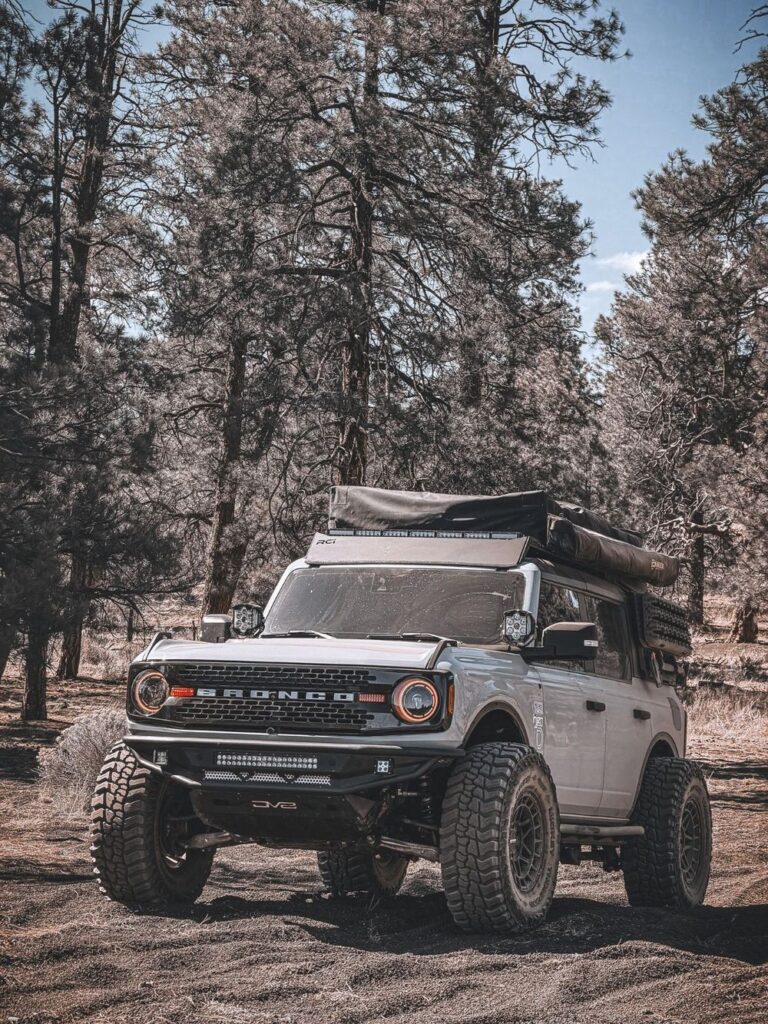
Designed around 37-inch tires in its top trim, the 6th-generation Ford Bronco is one of the few 4×4 vehicles that are friendly to oversized tires. Most modern SUV owners can only dream of mounting something larger than 33″, because going bigger requires extensive modifications. With the Bronco, which can be bought stock with 35″s and even 37″s in the top Raptor trim, upsizing doesn’t pose these challenges.
Since 2021 when the late model Bronco was released we have featured more than 50 builds and written 6 in-depth build reviews dedicated to some of the most significant projects. After analyzing their wheel/tires and suspension/steering setups we identified a strong trend – 37-inch tires are used in real off-road-dedicated builds over 80% of the time compared to other big tire sizes such as 38″s and 40″s. Most owners who go big stop at 37 inches, not because 40s won’t fit, but because 37 is the largest tire a Bronco can run before a tire upgrade turns into a full rebuild.
A deeper dive into the Bronco Trail Control™ and suspension/steering components allowed us to explain the reasons behind this. Read on to find all of them and reach a fact-based conclusion on whether you need to choose 37″s or go bigger for your off-road setup.
| Build | Tires | Wheels | Lift & key parts |
|---|---|---|---|
| Wildtrak 4-door | Mickey Thompson Baja Boss M/T 37×13.50R17 | Anthem Off-Road Valor 17×9, 1″ spacers | 3″ ICON Stage 4, billet UCAs, Extreme Duty tie rods |
| Black Diamond Sasquatch 4-door | Nitto Trail Grappler 37×12.50R17 | KMC Grenade beadlock 17×8.5, 0mm | King 2.5 coilovers, Camburg UCAs, RCV axles, diff drop |
| Wildtrak 2-door widebody | BFGoodrich KO2 37×12.50R17 | Vorsteiner 601BL (simulated beadlock) 17×9, 0mm | Up to 2.5″, Peak 2.5″ coilovers |
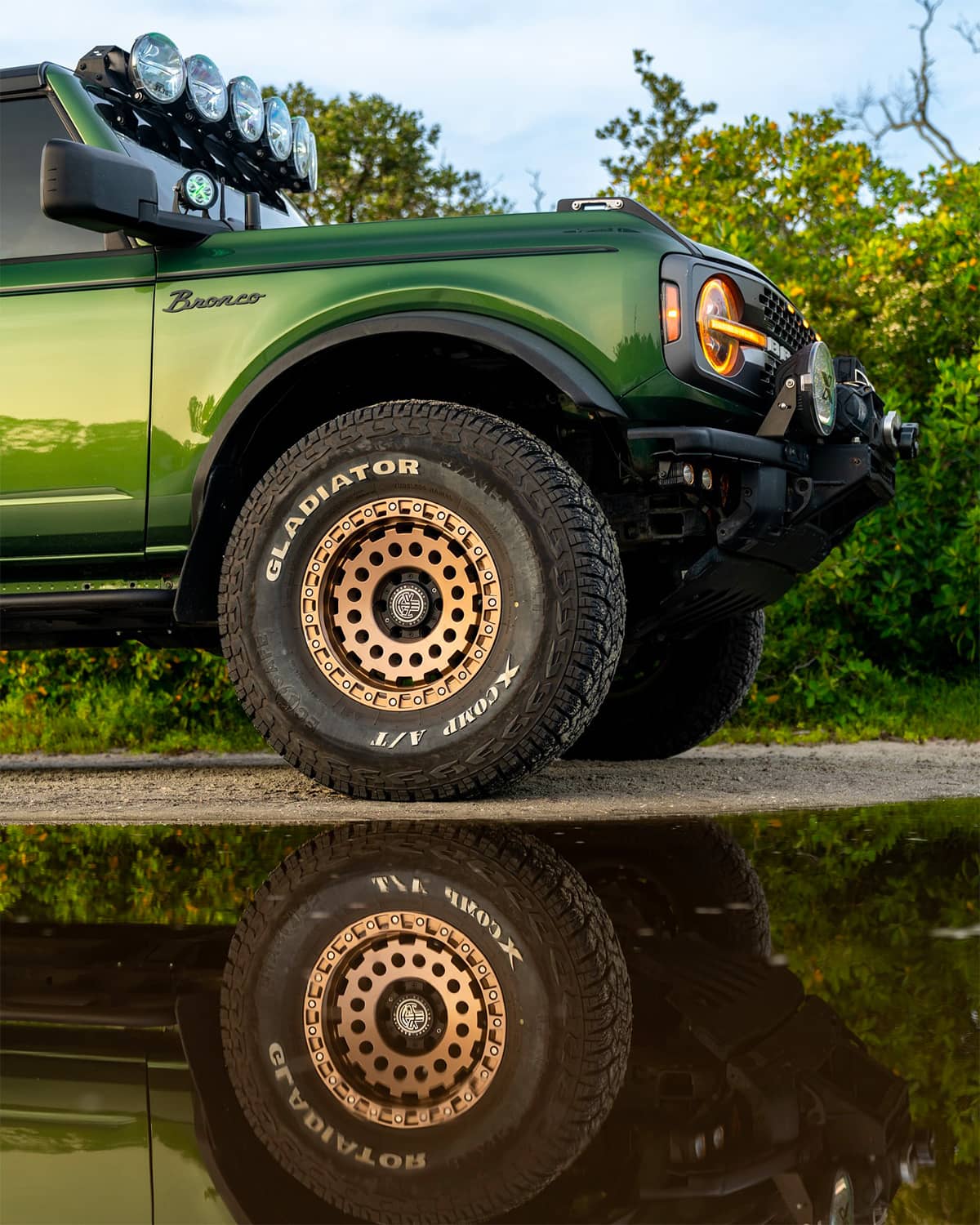
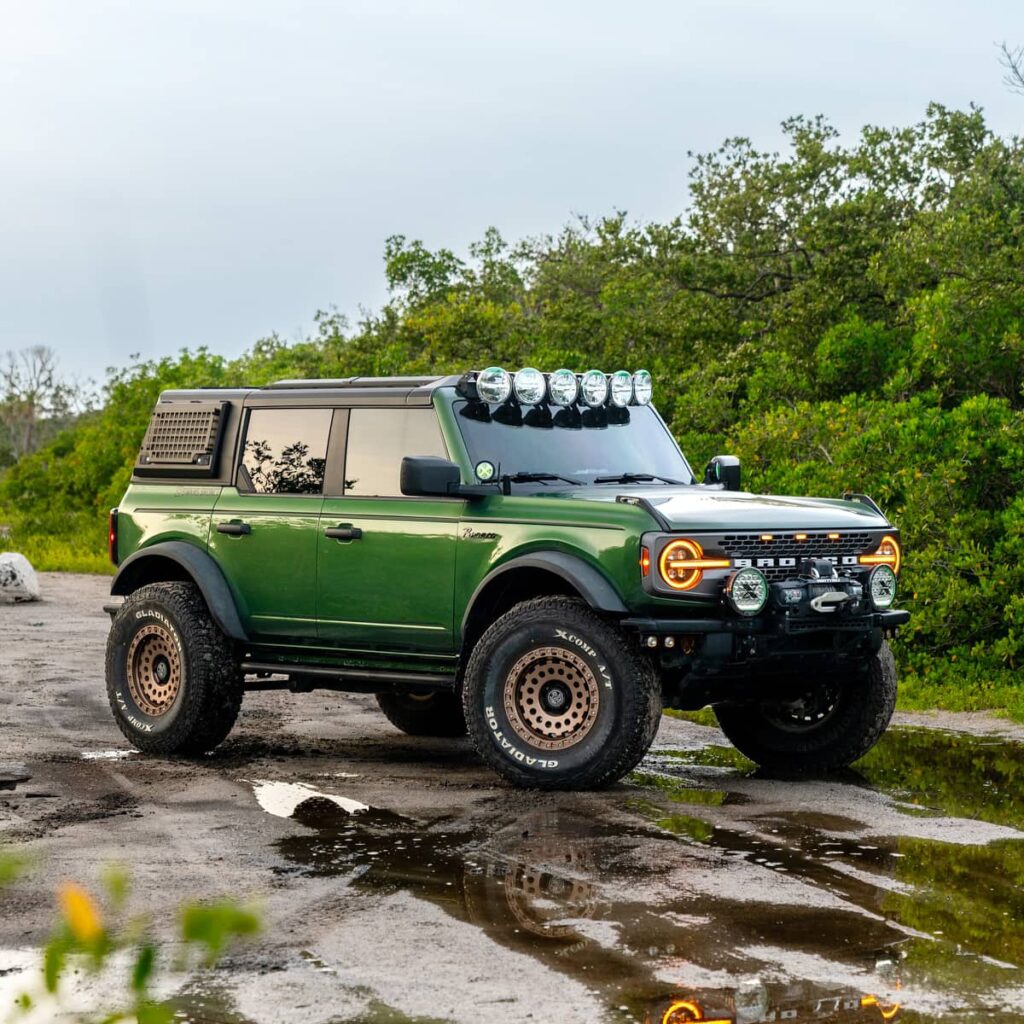
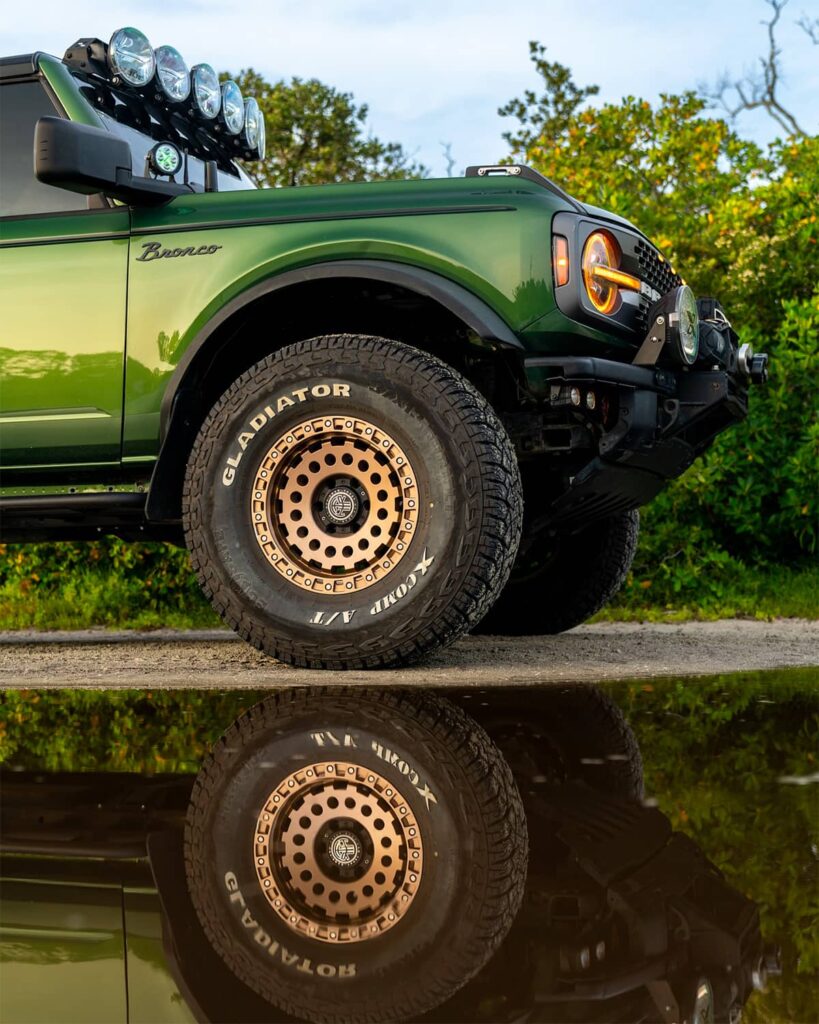
| Big Bend 4-door | Gladiator X Comp A/T 37×13.50R17 | Thret Firewall 702 17×9, -12mm | 3″, Dobinsons IMS coilovers |
| Wildtrak Sasquatch 2-door | Nitto Trail Grappler 37″ on 18″ wheels | Method 106 beadlock 18×9, -44mm | 3″ Zone spacer lift, RPG arms and tie rods |
| Wildtrak APG Pro-Runner | Nitto Trail Grappler M/T 40×13.50R17 | Baja Built Race beadlock 17×9 | Long-travel front, Dana 60 rear, King 3.0 coilovers |
What Our 5-Year Study Shows
Five of our six featured Broncos (83%) are equipped with 37s (and none of them is the Raptor). The sixth, an APG Pro-Runner conversion, runs 40s.
Six trucks isn’t a huge sample, so we analyzed the wider owner community to see how it correlates with a bigger cohort – and the numbers lined up almost perfectly.
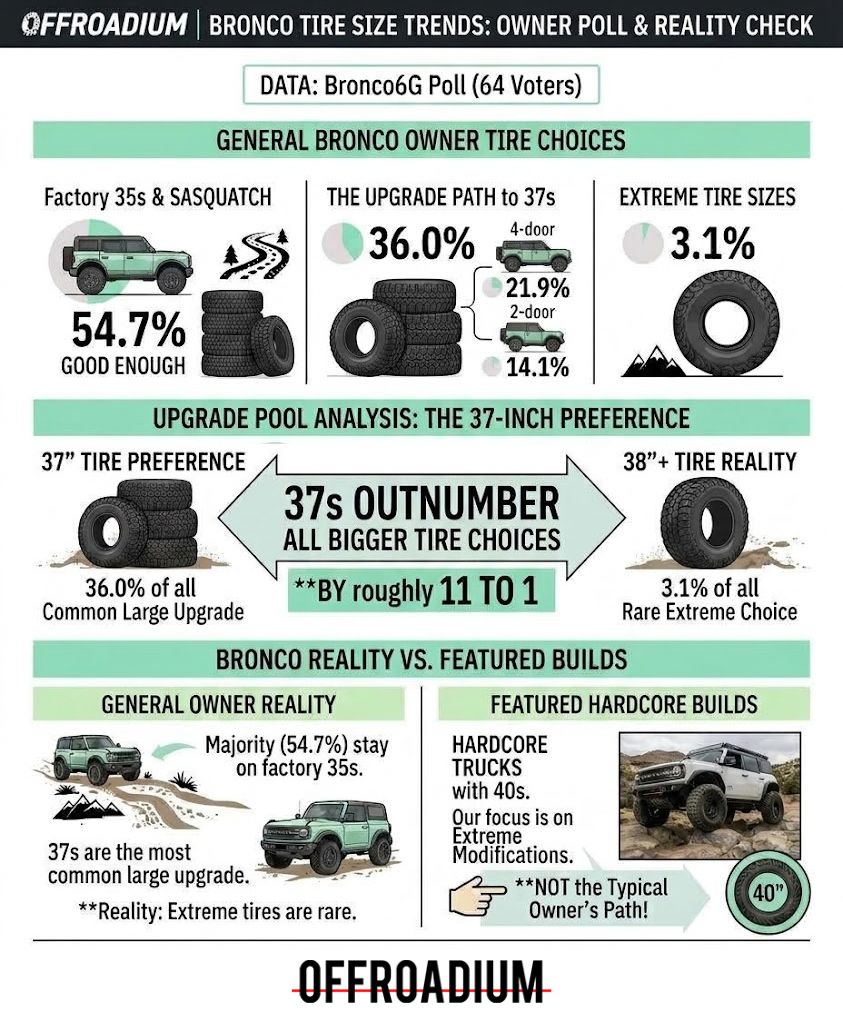
In a Bronco6G owner poll of 64 voters, 54.7% said the factory 35s were good enough for them, about 36% had moved to 37s (21.9% four-doors, 14.1% two-doors), and only 3.1% had gone to 38s or bigger.
This result suggests that most Bronco owners never go beyond the factory tires at all. But among the ones who do, 37s outnumber anything bigger by roughly 11 to 1.
The six builds also share a surprisingly consistent recipe. Four of the five 37-inch trucks started life with the Sasquatch package (every Wildtrak gets it as standard, plus the Black Diamond), none of them regeared, four of five are equipped with a 17-inch wheel, and whatever suspension type they use, the lift height stays between 2.5 and 3 inches. Nitto’s Trail Grappler is the single most popular tire, appearing on three of the six trucks – every time on a true beadlock wheel (suggesting advanced off-road use).
Why Owners Stop at 37 Inches
Ford Itself Drew the Line at 37
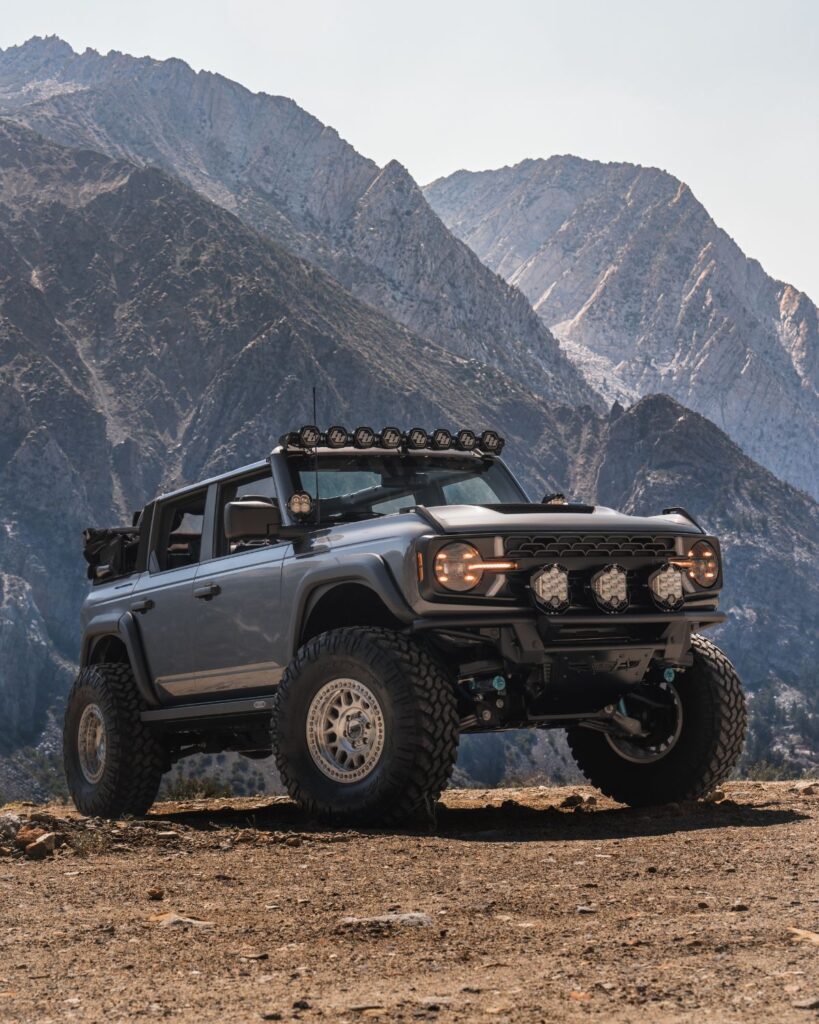
Interestingly, the strongest argument in favor of 37s actually comes straight from Ford itself. The Bronco Raptor comes with 37×12.50R17 BFGoodrich KO2s from the factory, and the Multimatic Bronco DR version runs them too.
Further research shows that Ford Performance’s tire-size calibrations top out at 37-inch tires (with gearing up to 5.38), and owners report that anything taller can’t be dialed in precisely, which leaves your speedometer and the calibration that depends on it slightly off. Since the company that designed the IFS, the axles and the electronics stops at 37, that’s a strong hint about where the platform is comfortable.
Here’s what Austin Berendes says about his tire choice on his early 2-Door Wildtrak build:
I ended up picking them up and throwing them on with the stock wheels and stock suspension. I ran that for a little till the tires came in from Nitto, and to everyone’s surprise, I had no rubbing issues whatsoever, and they looked sick! Still after getting the 37s and 3-inch lift kit on I have no rubbing.
The Factory Gears Already Handle 37s
Spending money on regearing isn’t really required. The Sasquatch package brings 4.70 axle gears, and the consensus among owners is that 4.70s are more than enough for 37s – even 4.46s are considered fine for how the vehicle behaves on and off road.
Gear Ratio
The standard axle gear ratio on a base Ford Bronco depends on which transmission it has: 3.73:1 for the 10-speed automatic and 4.46:1 for the 7-speed. If the base Bronco is upgraded with the Sasquatch package, the axle gear ratio changes to 4.70:1 paired with locking differentials and 35-inch tires.
That’s exactly why none of the five 37-inch builds from our in-depth features bothered with a regear. However, if you decide to go with 40s, a regear (typically to 5.38) becomes mandatory, which is quite an expensive job on both axles before you’ve paid for a single tire. If your Bronco left the factory without the Sasquatch package, check your axle ratio before ordering 37s – a regear may be needed.
37s Are a Bolt-On Build, 40s Are a Rebuild
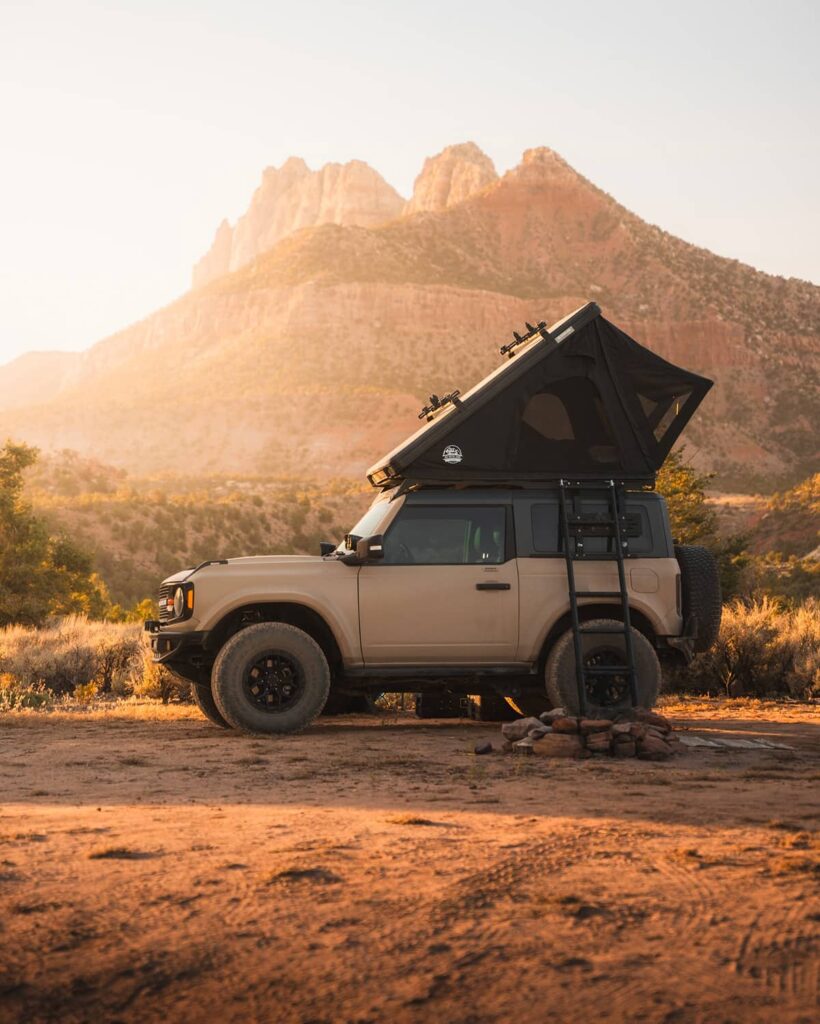
Various fitment calculators and lift kit installation guides like BDS put the sweet spot for 37s at roughly 2.5-4.5 inches of lift over Sasquatch height, and BDS specs 37×12.50 tires on 17×9 wheels with 5–5.5 inches of backspacing, and notes that trimming may be required – almost exactly what our builds run. A 3–3.5-inch lift with upper control arms, drop brackets and some trimming will fit 37s on any trim.
40s are a different animal. Lift guides call for 4–5 inches plus long-arm kits, and even with its 7-inch kit, Rough Country notes that 40s require an aftermarket bumper. Bronco owners who’ve done it sum up the shopping list as a lift, a body lift, control arms, a diff drop and a reciprocating saw – before you even get to portal axles. The daily-driving penalty is real, too: one owner on 40s and a 7-inch lift reports losing about 100 miles of range.
| 37-inch tires | 40-inch tires | |
|---|---|---|
| Featured Offroadium builds | 5 of 6 | 1 of 6 |
| Typical lift | 2.5–3″ | 5–7″ or long-travel |
| Wheel setup | 17×9, zero or negative offset | 17×9 race beadlock |
| Gearing | Factory 4.70 (Sasquatch) is enough | Regear usually needed, typically 5.38 |
| Body mods | Flare delete, aftermarket fenders or widebody; some run stock | Major fender cutting or full widebody, aftermarket bumper |
| Calibration | Factory size on Bronco Raptor; friendly to calibration | Beyond standard calibration |
| Best for | Daily / Advanced off-road build | A dedicated trail or race rig |
The IFS Front End Sets the Limit
As a mechanic, this is the part I’d underline. The 6th Gen’s independent front suspension pays for every inch of tire you add. Lift it beyond a certain point and CV angles get steeper, which is why owners recommend a differential drop (used in 1 of our featured builds).
Bigger, heavier tires add leverage on CV joints, tie rods and ball joints, and stronger aftermarket CV shafts can simply move the weak point into the front differential. Our builds reflect this – three of the five 37-inch trucks upgraded both upper control arms and tie rods, but only one (the Black Diamond) added RCV CV axles and a Brokn Innovation diff drop.
If you plan to wheel your 37s hard, that’s the upgrade I’d move up the list. On 40s, the problem gets big enough that the APG build in our study replaced the front geometry entirely.
The 37-Inch Bronco Recipe: What Owners Actually Run
Put the five 37-inch builds side by side, and the recipe almost writes itself:
| Component | What owners used |
|---|---|
| Starting point | Sasquatch-equipped trim in 4 of 5 (factory 4.70 gears) |
| Tire size | 37×12.50 most common; 37×13.50 on two builds |
| Tire type | Mud-terrain on 3 of 5, all-terrain on 2 |
| Wheels | 17×9 most common; 17″ diameter on 4 of 5 |
| Offset | 0 to -44mm; one build used 1″ spacers instead |
| Beadlocks | True beadlocks on 2 of 5, plus 1 simulated |
| Lift | 2.5–3″ coilover or spacer lift |
| Upper control arms | Upgraded on 3 of 5 (ICON, Camburg, RPG) |
| Steering | Tie rods upgraded on 3 of 5; Broncbuster insert on 2 |
| Fenders | Modified on 3 of 5; 1 runs stock fenders rub-free |
| Axles & gearing | No regears; 1 build added RCV CV axles and a diff drop |
The wheel story is consistent too, with a 17×9 wheel at zero or negative offset (0, 0, -12 and -44mm in our builds) to push the tire out and away from the upper control arm, with one owner using 1-inch spacers on a standard wheel instead.
The trade-off is more leverage on wheel bearings and steering parts (one more reason those tie rod upgrades keep showing up). Seventeen-inch wheels dominate because they leave the most sidewall, and sidewall is what you air down.
Fenders are the part that gets modified most often – three of the five 37-inch trucks changed them (the 4-door Wildtrak got a Rough Country fender flare delete because its 37s would rub in the stock fenders, the Black Diamond wears Bestop fenders, and the 2-door Wildtrak got an ADV Fiberglass 5-inch wide-body kit).
On the other hand, the Sasquatch 2-door Wildtrak runs stock fenders on 37s and a 3-inch lift. And don’t forget the spare. A 37 on its wheel can push past 100 lbs, and the owner of the 4-door Wildtrak moved his to a Smittybilt HD pivot carrier.
A 37-inch spare tire can fit in the factory tailgate location on a standard Ford Bronco, but it requires extra parts and modifications because of the heavy weight and size.
Which 37-Inch Tires Bronco Owners Choose – and Why
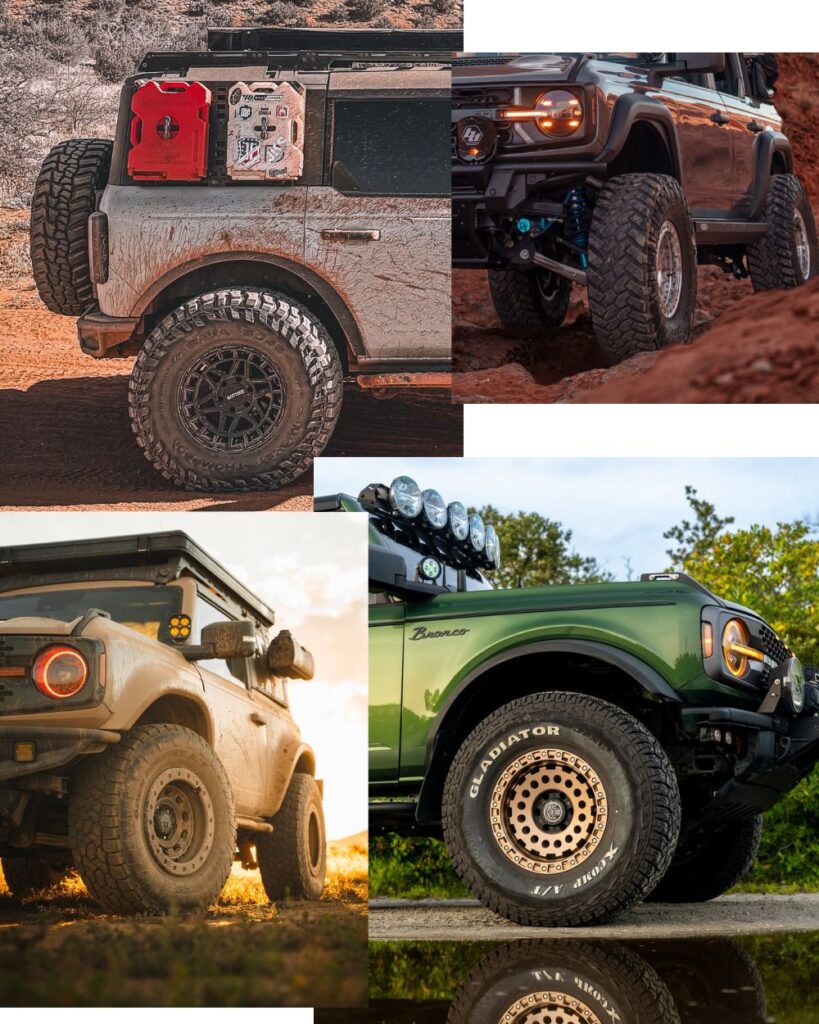
Four different tires appear on the five 37-inch builds, and they sort cleanly by what each owner was optimizing for: real height, weight, pavement manners or price.
| Tire | Type | Load range | Weight | Real height | 3PMSF snow rating | Approx. price/tire |
|---|---|---|---|---|---|---|
| Nitto Trail Grappler M/T | Mud-terrain | D | ~87 lbs | 36.85″ | No | ~$485 |
| Mickey Thompson Baja Boss M/T | Mud-terrain | D | ~79 lbs | 36.8″ | No | ~$485 |
| BFGoodrich KO2 | All-terrain | C | ~65 lbs | ~36.5″ | Yes | ~$340–410 |
| Gladiator X Comp A/T | All-terrain | E | Not published | 36.5″ | Yes | ~$290–335 |
Specs are for 37×12.50R17, except the Gladiator (37×13.50R17). Prices are from online listings at the time of writing.
- Nitto Trail Grappler M/T – the builder’s favorite. Three of our six trucks run it, and it’s easy to see why. It’s a true-size tire (36.85″ in 37×12.50R17), it delivers full mud-terrain bite, and Nitto engineered its tread to be about 36% quieter on the highway than its Mud Grappler. It’s also one of the few tires offered in true-size 37s and 40s, so the same rubber covers both kinds of builds. The trade-offs: at around 87 lbs it’s the heaviest tire here, owners say it gets louder as it wears, and it isn’t three-peak rated for severe snow.
- Mickey Thompson Baja Boss M/T – the lighter mud tire. It offers practically the same real height (36.8″) at about 79 lbs, with an asymmetric tread for lower road noise and a reinforced three-ply PowerPly XD sidewall. If you want mud-terrain traction but care about unsprung weight hanging off the IFS, this is the one to look at.
- BFGoodrich KO2 – the factory benchmark. It’s the Bronco Raptor’s original-equipment tire and by far the lightest here at roughly 65 lbs in load range C. Owners praise its even wear, quiet ride and three-peak snow rating; the weak spots are thick mud and a habit of throwing gravel. It’s also the shortest “37” in the group at about 36.5″. Raptor take-off sets circulate at good prices, and its KO3 successor is slowly arriving in 37×12.50R17 – first only in a heavy load range F (about 76 lbs), with a lighter C-load version reportedly showing up in 2026.
- Gladiator X Comp A/T – the value play. At roughly $290–335 per tire, it costs far less than the others and still carries a three-peak snow rating. It’s a 10-ply, load range E tire, though, and Bronco owners generally find E-rated tires too stiff and heavy for this truck. It’s a smaller brand with less trail reputation behind it, but buyer reviews are strong – one Bronco owner even switched to X Comps after his previous mud tires chunked and cracked.
Notice the split:
Three of the five 37-inch builds chose mud-terrains, and both Nitto-equipped 37 builds sit on true beadlocks. Because the trucks we feature lean hardcore, the broader population of daily-driven Broncos on 37s likely leans more toward all-terrains like the KO2 and KO3.

Method 106 beadlock 18×9 rims (-44mm) and 3″ Zone Off-Road spacer lift (plus, RPG arms and tie rods)
How Low Can You Air Down 37s on a Bronco?
Airing down is half the reason to run a big tire, and our study turned up a clear rule: on a Bronco, the wheel decides how low you can go, and the tire decides how well it works once you get there. Tire makers stay conservative for liability reasons – BFGoodrich’s published advice is not to go below 20 psi, and Mickey Thompson suggests about 22 psi as a general minimum – but experienced owners go much lower, depending on the wheel.

| Terrain | Standard wheel | True beadlock wheel |
|---|---|---|
| General trail | 18–25 psi | 12–18 psi |
| Rocks | 10–15 psi | 6–8 psi |
| Sand | 12–15 psi | 6–10 psi |
Those ranges, from MetalCloak’s airing-down guide, match what Bronco owners report: 12–14 psi on 37s is common on standard wheels, and owners on Ford Performance beadlock rings run single digits on technical trails, with one reporting 9–10 psi without issues.
One warning from our own build data – simulated beadlocks are not beadlocks. The Vorsteiner 601BL on the 2-door Wildtrak looks the part, but on rims with a simulated beadlock style you should not air down to the extreme low pressures you’d run on a mechanical beadlock (stay at 15 psi or above).
Treat the standard one-piece wheels on the Baja Boss and Gladiator builds with the same caution. Interestingly, among our featured builds, only the three Nitto-equipped trucks run true beadlocks.
When 40-Inch Tires Make Sense
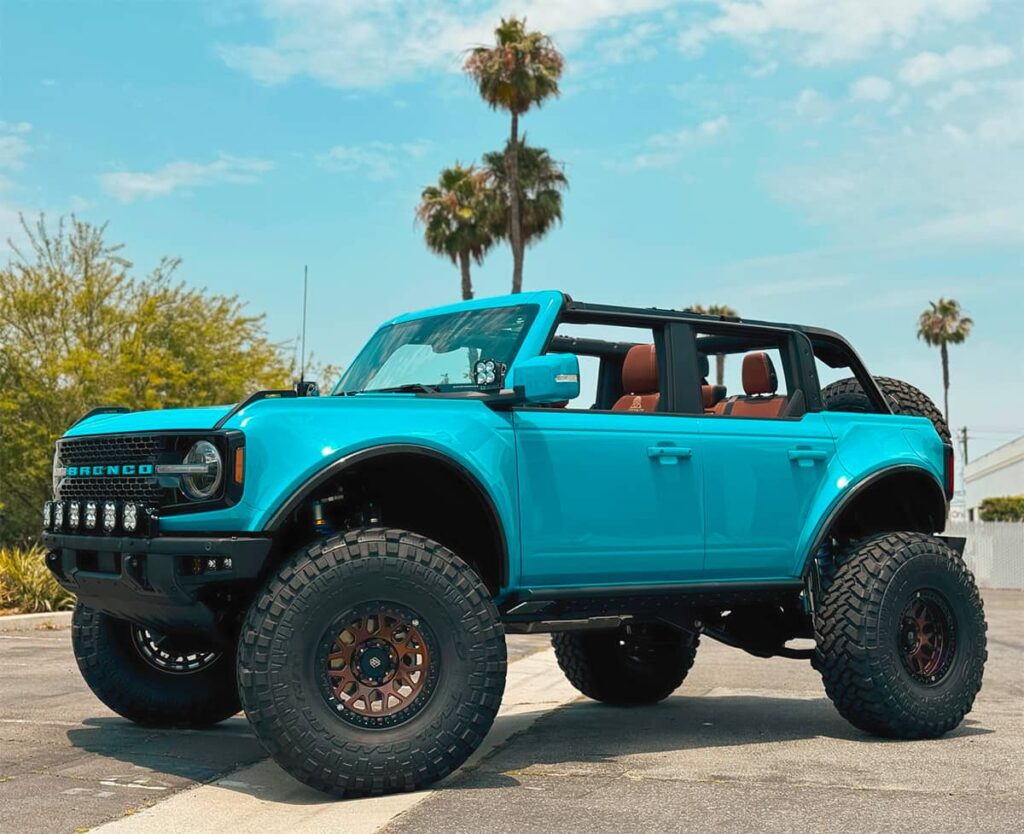
On the rear is a semi-float Dana 60 solid axle built by APG, along with long lower arms and 14-inch King coilovers with bypasses. Custom wide-body carbon fiber fenders and wheel wells are tailored to clear the 40×13.50R17 Nitto Trail Grapplers on light and strong Baja Built race beadlock rims, and the result is 16.5 inches of wheel travel.
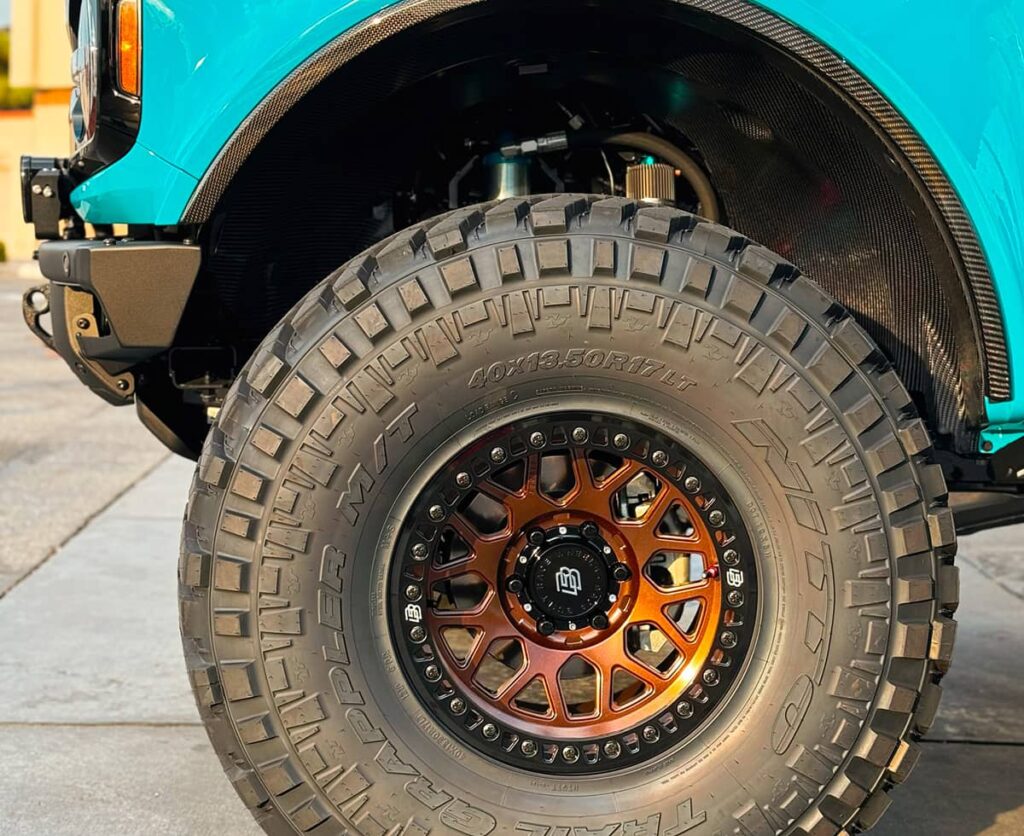
This build is a high-budget, purpose-built desert and trail rig, which goes way beyond just the tire and lift. If that’s your goal, 40s make perfect sense. If you want a Bronco that can handle technical trails on the weekend and still drive to work on Monday, this might be overkill.
Conclusion
Ford’s marketing team did its homework on how Jeep Wranglers are used and drew the right conclusions – these vehicles get modified often, so making this process easier for future customers may actually pay off in the long run even if they don’t buy the top level Raptor model. The sales data is a great illustration of this. People modify their Broncos, as they really don’t have many obstacles for it.
Think about it: owners of other 4×4 SUVs can only dream of fitting 35″s without spending a small fortune on the extensive modifications required. With Broncos, 35″s fit pretty much right in and 37″s are pretty easy with a 2-3″ lift! There aren’t many 4x4s built this way, so don’t underestimate this privilege.
Midway through 2026, Jeep has sold 86,254 Wranglers to date, while Ford’s sales tally stands at 76,936—still a good bit behind the Wrangler—but Ford says it has momentum on its side. – Yahoo Finance
For the real world off-roading, the tire size means much more than any other modification as it determines all the key parameters such as the tire/surface contact patch, ground clearance, breakover angle, approach and departure angles and of course the size of an obstacle you can overcome.
Budget Estimate
Our stock off-road vehicle rating system relies heavily on the tire size parameter, which determines a vehicle’s off-road capabilities. For example a Ford Bronco Wildtrak with Sasquatch package and 35″s scores 94.2, while the Raptor model equipped with 37″s scores 98.2, just a few points below our ideal 4×4 vehicle benchmark, and majority of that improvement comes from the wheels themselves.
When 37″s are relatively easy to install with minimal impact on the 4×4 system electronics, driveline components and final gear ratio, why stop at 35″s and limit the off-road capabilities? That’s the main driver behind the decision to choose 37″s.
37 is the largest tire the 6th Gen handles as a bolt-on upgrade. Ford itself stops there on the Raptor and DR, the Sasquatch package’s 4.70 gears already handle it, and the recipe is proven: about three inches of lift, a 17×9 wheel at zero or negative offset, upgraded upper control arms and tie rods, and some fender work. Our 5-year study and the wider owner community say the same thing – five of our six featured builds run 37s, and among owners who go past the factory 35s, 37s outnumber anything bigger by roughly 11 to 1.
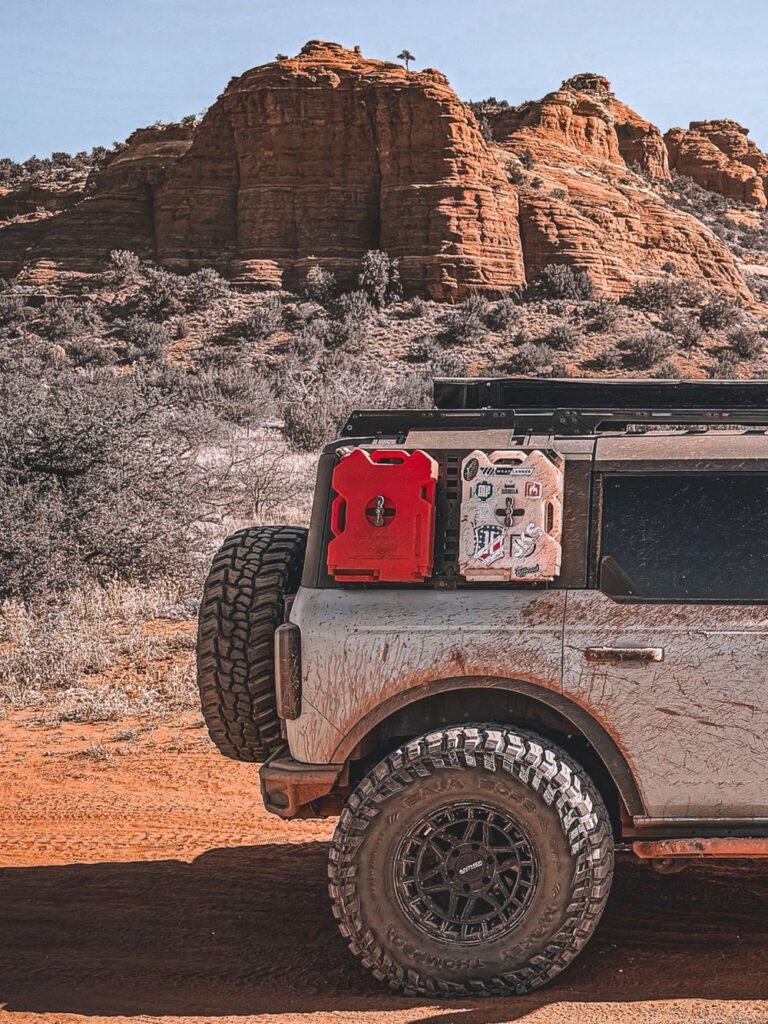
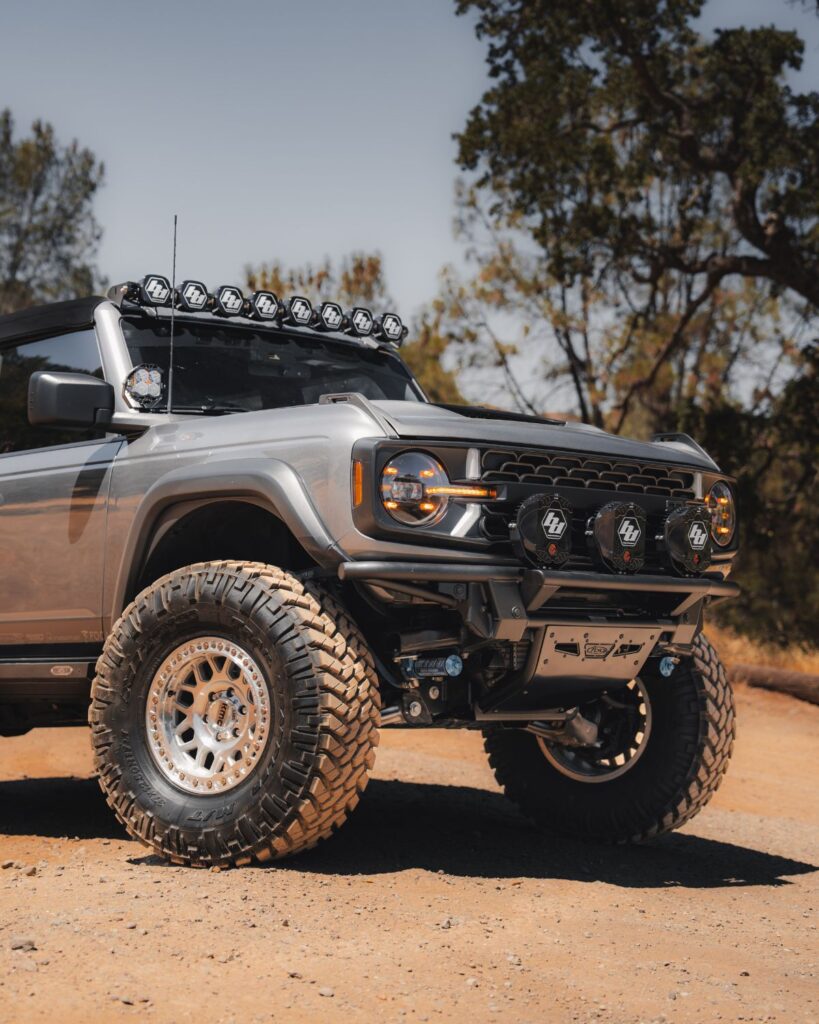
37s aren’t free, though. They add weight and leverage to the IFS, dent fuel economy, usually call for fender work, and if you wheel hard, the front CV axles and differential deserve attention. 40s, on the other hand, are the fabricator’s choice: a regear, a big lift or long-travel suspension, fender surgery and drivetrain upgrades are required. For most owners building a dedicated off-road Bronco that still has to drive home, 37 is the sweet spot – and that’s why they stick with it.
Stay tuned for more project reviews on Offroadium.com – Follow us on social media, and share this write-up if you enjoyed reading it!